
The Judiciary Lecture
A. Introduction
An understanding of the hierarchy of courts in the UK is helpful in explaining the various judicial functions. The higher courts – the Court of Appeal and the Supreme Court – have certain law-making functions, which means that their decisions are binding on lower courts. They also have particular roles as appeal courts and hence perform the function of reviewing the decisions of lower courts. This hierarchy of courts is important in ensuring that the administration of justice functions effectively within the court system and, in particular in relation to public law, acts as an important limitation on the abuse of the powers of the executive and legislative branches of government.
B. The structure of the judicial system
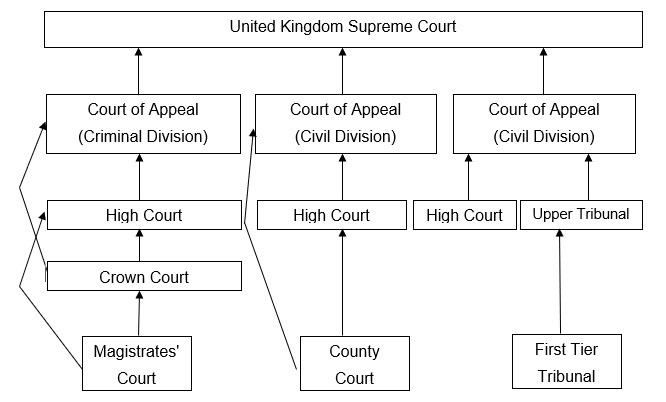
Figure 10.1 The judicial system in England and Wales
Court hierarchy
Figure 10.1 shows the basic architecture of the judicial system in England and Wales. A variety of courts operate in a hierarchical system and fulfil a variety of functions within it. At the first tier, the Magistrates’ Court exists for less serious criminal offences, the County Court for civil matters, the Family Court for most family proceedings, and the First-tier Tribunal for specialist jurisdictions. These are courts of first instance, which means that the cases they hear are heard for the first time. These courts are generally finders of fact: they hear witnesses and consider evidence presented to the court. The Crown Court is also a criminal court of first instance and hears cases involving more serious criminal offences (offences triable only on indictment or offences triable either way).
The second level includes courts of higher standing, including the High Court and the Upper Tribunal. The High Court hears most types of judicial review at first instance. The Upper Tribunal is also a superior court of record. It determines appeals on a point of law from the First-tier Tribunal and has its own limited judicial review jurisdiction, including in immigration cases. The Court of Appeal (which is divided into a Civil Division and a Criminal Division) primarily hears appeals. Its Criminal Division also hears references, for example when the Attorney General refers a point of law following an acquittal on indictment.
The Supreme Court is at the top of the hierarchy and its role is to determine questions of law usually appealed from a senior appellate court. In specified circumstances a case may go directly to it from a lower court or tribunal. Its predecessor was the Appellate Committee of the House of Lords, and both courts tend to take cases which are of specific importance in areas of law. The website of the Supreme Court states that “the Supreme Court is the final court of appeal in the UK for civil cases, and for criminal cases from England, Wales and Northern Ireland. It hears cases of the greatest public or constitutional importance affecting the whole population.” [https://www.supremecourt.uk/]
Exam consideration: A basic understanding of the court hierarchy is important in understanding the significance of certain judicial decisions. The hierarchy shows clearly that a decision of a lower court can be overruled by the decision of a higher court, and in particular highlights the special significance of decisions of the Court of Appeal and Supreme Court in the creation of principles of common law and judicial precedent.
Criminal and civil divisions
The court structure is also divided into specialisms, as has already been alluded to. Criminal, civil and administrative cases follow different routes. Administrative law cases form part of the civil jurisdiction. The criminal justice system is concerned with the prosecution of offenders who are accused of a criminal offence; the other party in such cases is the Crown (known as Regina or Rex, abbreviated to R, in case names – currently Rex during the reign of King Charles III). The majority of such cases start in the Magistrates’ Court, where a bail hearing may be held to determine whether an individual should be held in custody or released on bail. Less serious offences will be heard in the Magistrates’ Court before a panel of lay magistrates or a single district judge. More serious offences are heard in the Crown Court, and where magistrates accept jurisdiction over an either-way offence an adult defendant may normally elect for their case to be heard in the Crown Court in front of a single judge and a jury of twelve members of the public. Appeals from the Magistrates’ Court can be made to the Crown Court, and an appeal on a point of law by way of case stated may be made to the High Court (King’s Bench Division), which can also hear a case stated by the Crown Court on appeal from magistrates. In a criminal cause or matter a further appeal lies directly from the High Court to the Supreme Court. Appeals from trials on indictment in the Crown Court proceed to the Court of Appeal (Criminal Division). In either route, a further appeal to the Supreme Court ordinarily requires the court below to certify a point of law of general public importance and permission from that court or the Supreme Court.
The civil justice system deals with cases of a civil nature, such as personal injury claims or breaches of contract between two private parties. Most money claims must start in the County Court unless their value exceeds £100,000, or is at least £50,000 for personal injury. Some claims are subject to special rules. This usually depends upon the complexity of the legal and factual issues in the case, or the availability of specialist judges on the matter in issue. The usual first appeal from a district judge in the County Court is to a circuit judge, and from a circuit judge to the High Court. Some appeals lie directly to the Court of Appeal (Civil Division). A second appeal is subject to a stricter permission test.
Administrative law is part of public law and is concerned with challenges against public or governmental decisions. Judicial review cases involve a challenge against the actions or decisions of a public body. The tribunal system handles a large number of cases each year in areas such as welfare, immigration and tax. The First-tier Tribunal hears cases at first instance, with appeals on points of law normally proceeding with permission to the Upper Tribunal. Employment tribunals have a separate appeal route to the Employment Appeal Tribunal.
Jurisdiction is conferred on courts in different ways. The High Court has inherent jurisdiction as well as statutory powers. Parliament can limit its jurisdiction by legislation. The High Court has three divisions: the Family Division, the King’s Bench Division and the Business and Property Division. The latter replaced the Chancery Division on 1 October 2026 and took over specialist business work from the King’s Bench Division. The King’s Bench Division includes the Administrative Court, in which judicial review cases are heard.
Figure 10.1 refers to the court structure in England and Wales only. Northern Ireland has a separate but similar system; however, the ultimate route of appeal lies with the UK Supreme Court. The UK Supreme Court is also the final appeal court in the Scottish court system for civil cases; however, much of the rest of that system differs from the structure of courts in England and Wales. In criminal cases, the High Court of Justiciary is the final court of appeal in Scotland, with no further appeal to the Supreme Court (although the Supreme Court may hear devolution issues and certain compatibility issues arising in Scottish criminal proceedings under the Scotland Act 1998 and the Criminal Procedure (Scotland) Act 1995).
Prior to the UK’s withdrawal from the European Union on 31 January 2020 (with the transition period ending on 31 December 2020), the Court of Justice of the European Union (CJEU) had a role in the UK legal system. UK courts could, and in certain cases were required to, refer contested questions of EU law to the CJEU. Following Brexit, the ordinary system of references ended, but the Withdrawal Agreement preserves limited CJEU jurisdiction. Examples include references on citizens’ rights under Article 158 within its eight-year time limits and on applicable EU rules under the Windsor Framework. EU law that was retained in UK domestic law at the end of the transition period was initially preserved by the European Union (Withdrawal) Act 2018, and has since been further reformed by the Retained EU Law (Revocation and Reform) Act 2023, which renamed retained EU law as ‘assimilated law’ and abolished the general principle of EU supremacy and retained general principles at the end of 2023, subject to savings for earlier events.
The UK remains a member of the Council of Europe and a signatory to the European Convention on Human Rights (ECHR). The Human Rights Act 1998 (HRA) requires UK courts, under s.2, to ‘take into account’ the judgments of the European Court of Human Rights (ECtHR) in Strasbourg when determining questions relating to Convention rights. However, UK courts are not strictly bound by ECtHR decisions. The ECtHR’s judgments are binding on the UK as a matter of international law when the UK is a party to a case before the court.
Case in focus: R (Alconbury Developments Ltd) v Secretary of State for the Environment, Transport and the Regions [2001] UKHL 23; [2003] 2 AC 295, [26]
The House of Lords held that UK courts would ‘follow any clear and constant jurisprudence’ of the Strasbourg Court unless particular circumstances apply. This position has been further refined in subsequent cases. In R (AB) v Secretary of State for Justice [2021] UKSC 28, the Supreme Court confirmed that while UK courts should normally follow clear and consistent Strasbourg jurisprudence, they are not bound to do so. They may apply Strasbourg principles to new circumstances where the Strasbourg court’s conclusion can be predicted with confidence.
C. The role of the judiciary
The role of the court system is to decide cases, including a determination of the relevant facts, then the determination of the relevant law, and the application of the relevant law to the relevant facts. The courts must ascertain what the relevant facts are; this may require a court to resolve a dispute about the facts. The lower tribunals and courts are primarily finders of fact; in criminal cases, this is through the presentation of evidence relating to the elements of the crime that the defendant is accused of. In other litigation, such as judicial review proceedings, the dispute does not usually centre on the facts but on whether the decision that was made is lawful.
Secondly, the court must determine the relevant legal rules to apply in the particular case. In certain instances, the court may even be required to clarify, develop or supplement existing legal principles in order to apply the law to new factual situations. The higher appellate courts fulfil this function in resolving points of law; this role is within the remit of the Court of Appeal and the UK Supreme Court. Cases which involve important points of law with a broad social importance might proceed to the Supreme Court for an authoritative resolution by the senior judges. These decisions are binding on the lower courts.
Finally, courts must apply the law to the facts: they must determine whether the facts satisfy the relevant legal requirements of the criminal offence or civil liability. In criminal trials, the prosecution ordinarily has to prove each element so that the jury or magistrates are sure of guilt, including any mental element the offence requires. In a judicial review case, the High Court might need to decide whether a government policy is in breach of an individual’s Convention rights.
There are bodies other than courts which also resolve disputes between parties; these include matters of private law that might be resolved through arbitration. A dispute relating to a contract between parties might be resolved through an award under the parties’ agreement to arbitrate. Unless otherwise agreed, the award is binding and may be enforced with the court’s permission. Alternative dispute resolution (ADR) refers to methods of resolving disputes which do not resort to the court system. The existence of such mechanisms for dispute resolution is important for three principal reasons.
- Courts operate as a longstop: it may be possible to resolve a dispute without recourse to the courts. It is often the case that no particular relationship exists between the parties to the dispute; if one party is injured due to the carelessness of a second party who is a stranger, no arrangement will exist between the parties to decide how the matter should be resolved. The outcome is that the careless party might simply refuse to participate in any form of voluntary dispute resolution process. Many of the cases that end up in court are of this sort, since without a third party being capable of determining a point of dispute, the matter cannot be resolved. It is necessary, in order to maintain social order, that an effective and independent judicial system is available to resolve disputes.
- Courts can exercise the coercive powers of the state: parties may not be willing to participate in a voluntary dispute resolution process, or if they do, one party may refuse to abide by the ruling. A civil court may order parties to engage in ADR where proportionate and consistent with their right to a judicial hearing (CPR 3.1(2)(o)). A mediator cannot impose a settlement, but the courts have the power to use their coercive authority to order a particular remedy. Ultimately, a party who deliberately disobeys an injunction can be held in contempt of court and may receive a custodial sentence. The courts can also use their coercive powers against the government, by quashing an unlawful decision.
- The courts are also a necessary element of the separation of powers doctrine, which means they are part of the essential checks and balances put in place so that other branches of government do not act outside of their powers.
The courts’ role in the UK constitution
Courts act as the adjudicators in cases involving public law. They are frequently asked to determine a case where a public body has infringed the rights of a private individual and are required to rule on the legality of a decision made by a public body. In ‘judicial review’ cases (dealt with in more depth in Chapter 11 of this module), the courts’ role is to determine the dispute by reference to the relevant legal principles and the evidence of the facts. In judicial review cases, courts are required to consider whether a public body has adhered to the special legal standards to which branches of government are required to conform. These standards include the principles of good decision-making, the relevant aspects of the rule of law, and the ECHR principles which are protected by the Human Rights Act 1998 (HRA). These special rules apply because it is acknowledged that the relationship between the state and the individual is one of unequal power; since the state has broad powers in relation to the individual, these powers must be exercised correctly.
Public bodies also possess a protective function. The Environment Agency (EA) exists in order to protect the environment in England, whereas Border Force carries out immigration and customs controls at the UK border. UK Visas and Immigration (UKVI) decides visa applications and Immigration Enforcement enforces immigration law within the UK. A public body might make a decision for the common good that is not in the interests of certain private individuals. The EA might make the decision to impose a permit condition to control pollution which costs a business money but is of benefit to society in general. Hence, it is clear that conflicts often arise between private individuals and the state in the form of public bodies, due to their decision-making powers and the ways in which these impact upon the rights and interests of individuals or private companies. Particularly since the introduction of the HRA, the courts have had a growing role in acting as a watchdog to protect the constitution, particularly in light of the powerful position of the executive branch within the UK.
Case in focus: R v Secretary of State for the Home Department, ex p Fire Brigades Union [1995] 2 AC 513
The court was required to discern the respective powers of the UK executive and the UK Parliament. The House of Lords held that the Home Secretary could not use the prerogative to introduce a tariff scheme for criminal injuries compensation which frustrated the statutory scheme Parliament had enacted but which had not yet been brought into force. In this case, it was necessary for the court to uphold the separation of powers between the responsibilities of Parliament and of the executive.
Unlike in some other countries, the courts are constrained by the principle of parliamentary sovereignty and are unable to strike down a Westminster Act simply because they consider it unconstitutional. A provision of a devolved legislature outside its legislative competence is not law. The courts’ powers to uphold constitutional principles, such as the rule of law or the separation of powers, are limited by contrary provisions within an Act of Parliament.
Functions other than dispute resolution
The resolution of disputes is necessarily a retrospective function; however, courts are capable of also acting in a more forward-looking manner. Under the doctrine of precedent, higher courts including the Court of Appeal and the UK Supreme Court can make decisions that clarify specific points of law and bind the lower courts in later cases. A judicial decision normally states the law applicable to events before the decision as well. A higher court might place an interpretation upon a certain form of behaviour to rule it unlawful, and then as a result people might change their behaviour to take account of this decision.
Case in focus: R v R [1992] 1 AC 599
The House of Lords held that, due to social changes, it was no longer appropriate to consider that a woman could not retract consent to sexual intercourse within marriage. The Lords reversed a position that had been stated by Sir Matthew Hale CJ in his posthumously published (1736) History of the Pleas of the Crown, in which he wrote: “But the husband cannot be guilty of Rape committed by himself upon his lawful wife, for by the mutual matrimonial consent and contract the wife has given herself up in this kind unto her husband which she cannot retract.” This case provides an example of the House of Lords binding future courts by reinterpreting existing law in ways that bring it up to date with the current attitudes of a changing society.
Courts may also grant declarations in cases where the lawfulness of a proposed course of action is in doubt. Although English courts do not give purely advisory opinions in the abstract sense found in some other legal systems, they can determine questions of law in advance where a real issue arises and a party genuinely needs to know whether a course of action would be lawful.
Case in focus: Airedale NHS Trust v Bland [1993] AC 789
Tony Bland was in a persistent vegetative state following the Hillsborough disaster in Sheffield, which occurred in 1989. Bland had been in that condition for nearly four years and had experienced extensive brain damage from which he could not recover. The House of Lords granted a declaration that it would be lawful to withdraw artificial nutrition and hydration from a patient in a persistent vegetative state where there was no prospect of recovery, and that doing so would not amount to unlawful homicide. The declaration enabled the hospital to know in advance whether this particular course of action would be lawful. Under the Mental Capacity Act 2005 a court application is not necessary in every such case. Where the statutory requirements and relevant professional guidance are followed and all concerned agree on the patient’s best interests, treatment may be withdrawn without one. Doubt or disagreement may require an application (An NHS Trust v Y [2018] UKSC 46).
Declarations can determine private rights as well as questions concerning public functions. The higher courts are able to grant declarations in order to provide authoritative rulings on the current state of the law so that public administration – and, as in Bland, decisions in other sensitive areas – can be carried out in a lawful manner.
Can judges make the law? The separation of powers doctrine
In Duport Steels Ltd v Sirs [1980] 1 WLR 142, 157, Lord Diplock stated: “Parliament makes the laws, the judiciary interpret them.” Parliament is not the only body that makes laws, since administrative bodies pass a wide range of secondary legislation. The courts do, however, also contribute to the law-making enterprise in a number of ways:
- Courts interpret legislation. The meaning of particular terms within a piece of legislation may be unclear, and it is for courts to consider what those meanings could be in line with previously decided cases. Certain factual scenarios might arise to which there is no clear provision within a statute; a judge will then need to choose between various potential interpretations of a statute.
- Legislation must also be interpreted in line with Convention rights under the ECHR, given effect in domestic law by the HRA. In certain cases, the courts’ role goes well beyond interpreting particular terms within statutory texts. Under s.3 of the HRA, courts must, so far as it is possible to do so, read and give effect to legislation in a way which is compatible with Convention rights. This interpretive obligation can have a significant impact upon the legal application of a specific statutory provision, and in this role judges may be seen as acting as judicial legislators, going much further than the simple application of the law to particular facts.
- Judges also more obviously create law when they develop new rules of common law. There are certain large areas of law – for example, parts of criminal law – that are devoid of legislative rules and are governed largely by common law principles. In contrast, the majority of public law is governed by statute, but the common law still has relevance in this area. The principles of judicial review, for example, are common law principles which have been developed by the courts.
Are these functions of judicial law-making compatible with the separation of powers doctrine, which states that the legislative and hence law-making function rests with Parliament? As was discussed in previous chapters, the UK does not have a pure separation of powers, and the courts’ role in statutory interpretation helps guard against the abuse of power. It helps to prevent any particular branch of government from holding excess power (in this case theoretically Parliament, but in practice it is often a safety valve on the power exercised by the executive).
Furthermore, the courts’ law-making powers are usually quite limited. The courts’ interpretive powers are of course constrained by the text of the legislation. Similarly, in creating common law, courts are restricted by past precedent; they generally act in an incremental fashion and do not make sweeping legal changes in deciding cases. It is always open to Parliament to legislate when courts make decisions that the executive considers are not in line with government policy. A decision by the House of Lords in R v Davis [2008] UKHL 36, [2008] 1 AC 1128 restricted the ability of courts at common law to allow witnesses to give evidence anonymously in criminal trials. Shortly after this decision, Parliament enacted the Criminal Evidence (Witness Anonymity) Act 2008, which granted criminal courts the statutory power to provide anonymity for witnesses in certain circumstances. This temporary measure was subsequently replaced by a permanent statutory framework under ss.86–97 of the Coroners and Justice Act 2009, which provides the current rules governing witness anonymity orders in criminal proceedings in England and Wales and Northern Ireland.
As unelected officials, judges are not subject to democratic selection by the public, and hence the separation of powers doctrine requires that there are significant limits on the courts’ law-making powers. This has been made clear by the courts themselves, when they have refused to rule on a particular question, stating that a matter requires an Act of Parliament to make changes to the law.
Case in focus: C (A Minor) v Director of Public Prosecutions [1996] AC 1, [1995] UKHL 15
The House of Lords upheld the doli incapax rule, which was the rebuttable presumption that a defendant aged 10 but under 14 lacked criminal capacity unless the prosecution proved the child knew the conduct was seriously wrong. The Lords found that making any such significant change in the law as to abolish such a rule would be the responsibility of Parliament rather than the courts.
This legal change came in the form of s.34 of the Crime and Disorder Act 1998, which states that “the rebuttable presumption of criminal law that a child aged 10 or over is incapable of committing an offence is hereby abolished.” In this way, the courts deferred to the law-making power of Parliament, recognising that to have abolished such a rule by judicial decision would have been inappropriate. Section 34 applies in England and Wales.
Exam consideration: Contrast the decision in C (A Minor) v DPP with the decision in R v R [1992] 1 AC 599. It might be considered that in such cases the courts are defining their own role in the law-making process. The latter case is a clear change in law, whereas in the former case the judges refused to make such a change. Does it appear that different judges might view the limits of their role differently, and how does this influence the limits of the courts’ law-making powers?
D. Judicial appointments
i. The judiciary
Appointments follow statutory selection procedures which differ between the UK jurisdictions. The King, on the advice of the Prime Minister (PM), makes appointments to the UK Supreme Court. The Lord Chief Justice, the Master of the Rolls and the President of the Family Division in England and Wales are appointed by the King on the recommendation of the Lord Chancellor following selection. The King, on the advice of the Lord Chancellor, appoints High Court judges; the same applies for circuit judges and recorders.
There are minimum requirements for judges to be qualified to take such a role. The Courts and Legal Services Act 1990 widened eligibility. Under section 10 of the Senior Courts Act 1981, as amended by the Tribunals, Courts and Enforcement Act 2007, a candidate for appointment as a High Court judge must satisfy the judicial-appointment eligibility condition on a seven-year basis or have been a circuit judge for at least two years. Candidates for appointment as Lord Justice of Appeal must satisfy the same seven-year condition or already be a High Court judge.
In practice, appointments to posts in the superior courts are frequently made of those individuals who have much more than the statutory minimum qualifications. It is exceptional for a person to be appointed to a senior judicial position otherwise than through promotion through other judicial positions. Occasionally, an academic has been promoted to judicial office; however, such an individual must also possess the relevant professional qualifications, and the required experience in law. Teaching or researching law can count towards the statutory period.
ii. Judicial Appointments Commission
Widespread criticism of the lack of transparency in the judicial appointments process was the impetus for the passage of the Constitutional Reform Act 2005 (CRA 2005). The Judicial Appointments Commission (JAC) was established by section 61 of the CRA 2005 and began work in April 2006. It selects candidates for judicial office in England and Wales and for certain tribunal posts with wider jurisdiction. The Commission includes a lay chairperson as well as a number of other commissioners. Its membership is prescribed under Schedule 12 to the Act and includes judicial, professional and lay members. Under section 63 selection must be on merit and the person selected must be of good character. Where candidates are of equal merit the selecting body may give preference to increase diversity.
In the event of a vacancy in a number of senior posts, the Lord Chancellor requests a selection panel. For the Chief Justice, Heads of Division and Court of Appeal appointments the Judicial Appointments Regulations 2013 provide for five-member panels, with the composition depending on the post. The outgoing office-holder cannot select their successor. The JAC conducts selections for ordinary High Court appointments. The appropriate decision-maker depends on the office. The power to reject a selection or ask for reconsideration is limited by the grounds and stages set out in the Regulations.
The Crime and Courts Act 2013 amended the CRA 2005 to require the Lord Chancellor and the Lord Chief Justice of England and Wales to take such steps as each considers appropriate to encourage judicial diversity. Section 64 already required the JAC to have regard to the need to encourage diversity in the range of persons available for judicial appointment. This was an important legislative recognition of the continuing concerns about the composition of the judiciary.
The Constitutional Reform Act 2005 (as amended) provides that the UK Supreme Court may have up to twelve full-time equivalent judges (styled ‘Justices of the Supreme Court’). Serving Justices of the Supreme Court are prohibited from taking an active part in the legislature. The Supreme Court was established on 1 October 2009; appointments require at least two years in high judicial office or qualification under one of the statutory fifteen-year legal experience or practitioner routes. Lord Sumption was appointed to the Supreme Court in 2012 directly from the Bar (he retired from the Court in 2018). Appointment to the Supreme Court does not bring a peerage, although justices are styled as ‘Lord’ or ‘Lady’ as a courtesy title.
Vacancies on the Supreme Court are filled through the appointment of an ad hoc Supreme Court Selection Commission. For an ordinary vacancy it includes the President of the Supreme Court, a senior UK judge from outside the Court nominated by the President, and one member from each of the JAC for England and Wales, the Judicial Appointments Board for Scotland and the Northern Ireland Judicial Appointments Commission. At least two of the three nominees must be non-legally qualified. For selection of the President, a non-legally qualified appointments-body member chairs the commission. The Supreme Court (Judicial Appointments) Regulations 2013 include further rules regarding the appointment and selection of members of the Supreme Court.
Judicial diversity has become an important question in recent years. According to the Judicial Diversity Statistics 2026 published by the Ministry of Justice, there has been progress but significant underrepresentation persists, particularly at the most senior levels. As of 1 April 2026, 40% of court judges in England and Wales were women, and 12% of court judges who declared their ethnicity identified as being from an ethnic minority background. Women held 30% of court posts at High Court level and above. In the Court of Appeal, the proportion of female Lord Justices of Appeal has increased in recent years. On the Supreme Court, Lady Hale served as the first female President (2017–2020), and at the time of writing Lady Rose of Colmworth and Lady Simler serve as Justices, while Lady Hale, Lady Black and Lady Arden served together from October 2018 until Lady Hale retired in January 2020. Despite developments over the past two decades, the senior judiciary remains disproportionately white and male. To be truly representative of society, it is necessary that the judiciary be more representative of a cross-section of the social composition of society. The statutory diversity duty introduced by the Crime and Courts Act 2013 was an important step, but its practical impact has been gradual.
E. Judicial independence
It is important that the courts are both independent and perceived to be so. The right to have civil rights and obligations or a criminal charge determined by an independent and impartial tribunal is a fundamental human right and is incorporated within Article 6 ECHR. Individual judges must not have an interest in the outcome of a particular case, as this might affect the fairness of the outcome and the integrity of the legal process. Judicial independence also requires that the executive and legislative branches of government do not unduly influence the courts. Certain steps have been taken in recent years to ensure that there is a sufficient separation between the judiciary as an institution and the other branches of government.
- The first of these steps was the establishment of the UK Supreme Court in October 2009. The Appellate Committee of the House of Lords had included members of the House of Lords in its legislative capacity, although by convention they did not participate in debates or votes relating to politically contentious matters. The Constitutional Reform Act 2005 established the UK Supreme Court as a separate institution. Although most of its original Justices had served on the Appellate Committee of the House of Lords, the creation of the Supreme Court placed into law the body’s institutional independence from the other branches of government.
- The Lord Chancellor until the CRA 2005 reforms held a senior role in all three branches of government. The Lord Chancellor appointed judges and also sat as a judge in the Appellate Committee of the House of Lords. The CRA 2005 transferred the role of head of the judiciary of England and Wales to the Lord Chief Justice. The Lord Chancellor no longer sits as a judge, and the office is held alongside that of Secretary of State for Justice. Section 3 of the CRA 2005 also imposed a statutory duty on government ministers to uphold the continued independence of the judiciary and provided that they must not seek to influence particular judicial decisions through any special access to the judiciary.
Security of tenure is another safeguard. High Court and Court of Appeal judges in England and Wales and Justices of the UK Supreme Court hold office during good behaviour and can be removed for misconduct only on an address of both Houses of Parliament (Senior Courts Act 1981, s.11 and CRA 2005, s.33). An independent judiciary is thus an essential element of the separation of powers doctrine. Although some of the changes in recent years may have been aimed at changes in public perception as much as at actual structural changes, public perception that justice is fair is itself an important element of the need for independence.
The judiciary and the courts – hands-on example
The following essay-style questions provide examples that can test your knowledge and understanding of the topics covered in the chapter on the judiciary and the courts. Suggested answers can be found at the end of this section. Make some notes about your immediate thoughts and, if necessary, go back and review the relevant chapter of the revision guide. Working through exam questions helps you to apply the law in practice rather than just having a general understanding of the legal principles. This should help you be prepared for particular questions which may be presented in the exam.
Q1 Do judges make the law?
Q2 Does the current system of judicial appointment lead to a suitably transparent process and sufficient diversity within the serving judiciary?
A1 The separation of powers doctrine states that it is for the legislature (i.e. Parliament) to create law. Members of Parliament are the political representatives of the people and have been elected into their positions, which means they should represent the public interest in the passage of legislation. However, there are certain ways in which it can be argued that judges do create law.
- It was stated by Lord Diplock in Duport Steels Ltd v Sirs [1980] 1 WLR 142, 157, that “Parliament makes the laws, the judiciary interpret them.”
- Judges interpret existing legislation. Where a term in an Act of Parliament is unclear, it is the judges’ role to consider what the various interpretations of a term in a statute might be and to choose between them.
- Judges are also required to uphold Convention rights given effect by the Human Rights Act 1998. Section 3 of the HRA creates provision for judges, so far as possible, to read and give effect to statutory provisions in a way which is compatible with Convention rights. This interpretive obligation can have a significant impact upon the legal application of a specific provision of legislation.
- Judges also create new rules of common law. These are intended to be incremental changes, but over many years and decades – particularly in areas such as criminal law, where many offences have historically been governed by common law – judges have created large areas of legal regulation over time.
For example, in R v R [1992] 1 AC 599, the House of Lords effectively recognised that a husband could be guilty of raping his wife. It had previously not been treated as an offence for a man to rape his wife, as it was argued that through the marriage contract a woman gave herself to her husband and was unable to withdraw consent. The House of Lords acknowledged the changes in society that made it no longer acceptable to suggest that rape in marriage was not possible.
Contrast this case with C (A Minor) v Director of Public Prosecutions [1996] AC 1, [1995] UKHL 15, where the court acknowledged that it was not its role to abolish the doli incapax rule and that it was for Parliament to legislate on the matter, which it did in s.34 of the Crime and Disorder Act 1998.
A2 Appointments follow statutory selection procedures. The King appoints UK Supreme Court Justices on the advice of the PM and High Court judges in England and Wales on the recommendation of the Lord Chancellor. The Courts and Legal Services Act 1990 widened eligibility for solicitors. The current qualification for the High Court is the seven-year judicial-appointment eligibility condition or at least two years as a circuit judge.
- Widespread criticism of the lack of transparency and diversity within the judicial appointments process led to the passage of the Constitutional Reform Act 2005. A year later, the Judicial Appointments Commission began work under section 61 of the Act in 2006.
- The Lord Chancellor requests that the JAC form a selection panel in the event of a vacancy for a senior judicial appointment. The composition of the five-member panel depends on the office. Where the Lord Chancellor is the decision-maker, a selection may be rejected or returned for reconsideration only within the prescribed limits.
- The establishment of the UK Supreme Court by the Constitutional Reform Act 2005 meant that law (rather than convention) now prohibits serving Justices from taking an active part in the legislature. Justices do not obtain a peerage by virtue of their membership of the Supreme Court.
- To fill a vacancy on the Supreme Court, an ad hoc Supreme Court Selection Commission is established, which must include a senior judge, members of the territorial judicial appointments bodies and at least two non-legally qualified members.
- The Crime and Courts Act 2013 amended the CRA 2005 to introduce a duty on the Lord Chancellor and Lord Chief Justice of England and Wales to take steps they consider appropriate to encourage judicial diversity.
- Despite these changes, progress on the diversity of gender and ethnicity within the judiciary has been gradual, particularly in the senior roles. According to the Judicial Diversity Statistics 2026, 40% of court judges in England and Wales were women on 1 April 2026, and 12% of those declaring ethnicity identified as being from an ethnic minority background. However, at the most senior levels, representation remains significantly below the composition of the general population.
- On the Supreme Court, Lady Hale served as the first female President (2017–2020), and Lady Rose of Colmworth and Lady Simler currently serve as Justices. Lady Hale, Lady Black and Lady Arden served together from 2018 to 2020, and ethnic minority representation on the Court has been extremely limited.
- The proportions of women and judges from ethnic minority backgrounds have increased over the past decade. Non-barristers held only 6% of court posts at High Court level and above in April 2026. Since it is the Court of Appeal and Supreme Court judges who make the most important legal policy decisions, it is important for the legitimacy and representative quality of the judiciary that this situation continues to improve.
Law Teacher writing support
Writing a law essay?
We choose a writer who is an expert in your area of law and qualified to at least the academic level you select. Most of our writers hold a master’s degree or PhD, have teaching experience, or both.
Send us your question and, if you wish, any marking criteria. We’ll write an essay to your instructions.

Cite This Module
To export a reference to this article please select a referencing style below: